 on
on
Future-Proof Freelancing: 12 Strategic Mistakes New Freelancers Make (And How to Avoid Them)
The freelancing landscape is changing faster than ever, and the choices you make today will determine whether you thrive or struggle tomorrow. New freelancers often focus on immediate wins while ignoring long-term sustainability, leaving them vulnerable to market shifts and industry changes. This guide highlights strategic mistakes that can derail your freelance career before it gains momentum, with practical solutions to help you build a resilient, adaptable business that stands the test of time.
- Building Your Business on Unreliable Platforms Instead of Marketplace Networks

Many new freelancers scramble to find clients through scattered social media posts or unreliable job boards, wasting time on platforms that may disappear or change their algorithms overnight. A smarter approach involves establishing your presence on proven marketplace networks like Legiit, where buyers actively search for services and the platform handles payment security and dispute resolution. Legiit specializes in digital services and provides built-in credibility through reviews and ratings, helping you build a sustainable client pipeline without constant self-promotion. By anchoring your business on a stable marketplace while diversifying your client sources, you create a foundation that adapts as the market changes.
- Ignoring the Shift Toward Specialized Skills
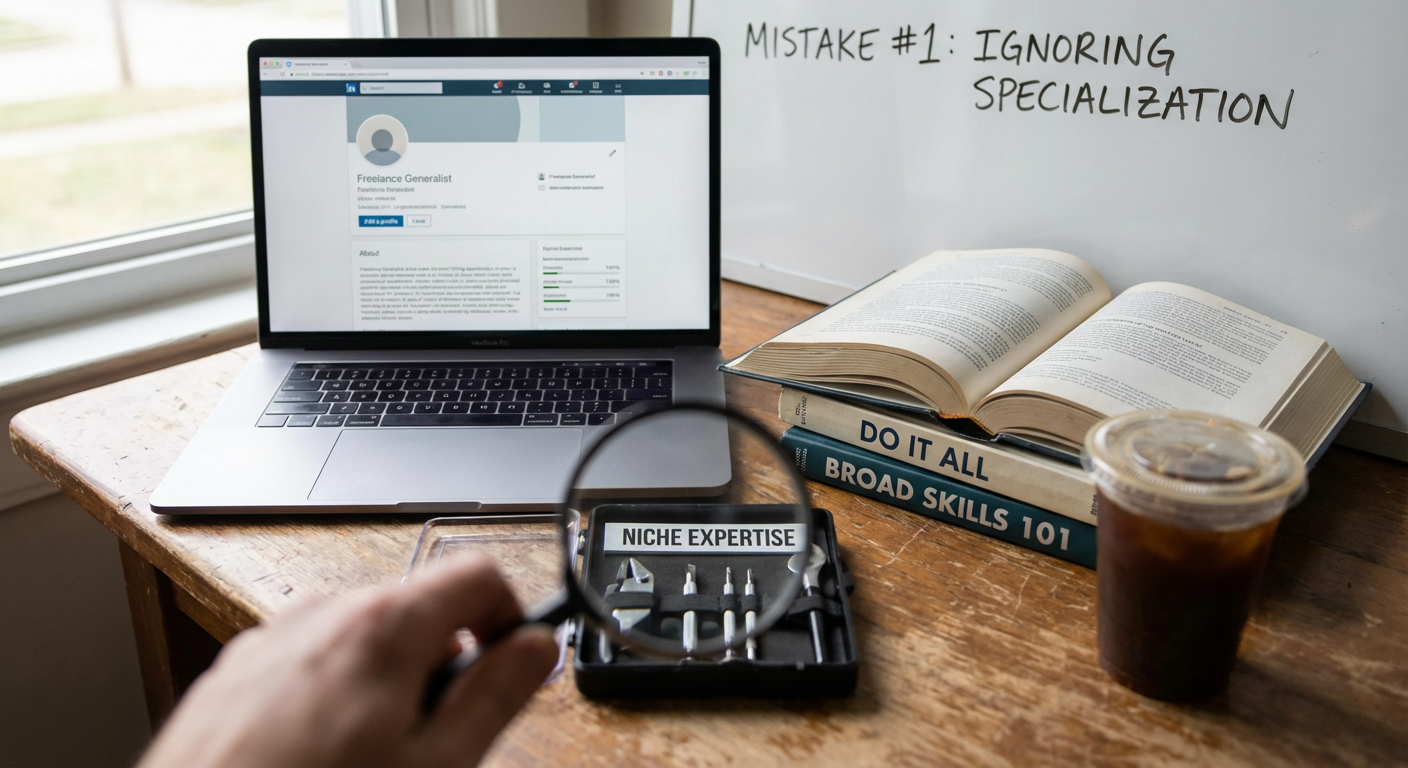
Positioning yourself as a generalist might seem like the safe choice, but it’s becoming harder to compete as clients increasingly seek specialists who deeply understand their specific needs. New freelancers often list twenty different services, hoping to appeal to everyone, which actually makes them less appealing to decision-makers looking for expertise. Instead, focus on developing a narrow skill set that addresses a specific problem or serves a particular industry.
For example, rather than offering “content writing,” specialize in “SaaS email sequences” or “healthcare blog content.” This focused approach makes you more memorable, allows you to charge higher rates, and positions you as an expert rather than a commodity. As automation and AI tools handle basic tasks, specialized human expertise becomes more valuable, not less.
- Failing to Document and Systematize Your Processes
Working without documented processes might feel flexible at first, but it creates a ceiling on how much you can grow and adapt. When every project requires you to reinvent the wheel, you waste time and struggle to maintain consistency as your workload increases. Smart freelancers create simple templates, checklists, and workflows early on, even when they’re handling just a few clients.
These systems become invaluable when you need to scale, bring on help, or pivot your services. Document your client onboarding process, your revision policy, your project milestones, and your delivery checklist. This preparation allows you to respond quickly when opportunities arise, rather than scrambling to figure things out under pressure. Future-ready freelancers treat their business like a system that can evolve, not a series of one-off transactions.
- Relying Solely on One Income Stream
Building your entire business around one type of service or one major client feels efficient until that income source disappears. Economic shifts, industry changes, or a single client’s budget cut can wipe out your revenue overnight if you haven’t diversified. Consider creating multiple service tiers, developing passive income products, or building complementary offerings that appeal to different market segments.
For instance, a graphic designer might offer custom design work, template packs, and coaching sessions. A writer could provide done-for-you content, content strategy consulting, and online courses. This approach doesn’t mean spreading yourself thin, it means creating related offerings that leverage your core expertise while protecting you from market volatility. The freelancers who survive long-term are those who build resilient business models with multiple revenue channels.
- Neglecting to Build an Email List from Day One
Most new freelancers focus entirely on finding their next client without building any owned audience, leaving them perpetually dependent on algorithms and third-party platforms. Social media accounts can be suspended, platforms can change their rules, and search rankings can drop, but an email list remains yours. Start collecting email addresses immediately, even if you only have a handful of past clients or interested prospects.
Send occasional updates about your services, share helpful insights related to your niche, or offer valuable resources that demonstrate your expertise. This list becomes a strategic asset that grows more valuable over time, allowing you to announce new services, fill your calendar during slow periods, or pivot your business without starting from scratch. Future-proof freelancers understand that owned media beats rented attention every single time.
- Underestimating the Importance of Contracts and Legal Protection
Working on handshake agreements or vague email exchanges might seem fine until a client dispute arises or someone refuses to pay. New freelancers often skip proper contracts to avoid seeming difficult or formal, but this leaves them legally vulnerable and signals inexperience. A clear contract protects both parties by defining scope, payment terms, revision limits, and ownership rights.
You don’t need an expensive lawyer to start. Use contract templates designed for freelancers in your field, then customize them as you learn what issues arise most often. Include clauses about late payments, project cancellations, and intellectual property. As regulations around digital work, data privacy, and remote employment continue to change, having solid legal foundations becomes increasingly important. Protecting yourself professionally is not optional if you want a sustainable business.
- Avoiding Financial Planning and Tax Preparation
Treating your freelance income like a regular paycheck, spending as money arrives without planning for taxes or slow months, is a recipe for financial stress. Many new freelancers get blindsided by their first tax bill or panic during their first income drought because they never created a financial buffer. Open a separate business account immediately and set aside a percentage of every payment for taxes, typically 25-30% depending on your location.
Build an emergency fund that covers at least three months of expenses, and track every business expense that might be tax-deductible. Use simple accounting software or spreadsheets to monitor your income and expenses monthly. As tax laws and freelance regulations continue to change, having organized finances helps you adapt quickly and take advantage of deductions you might otherwise miss. Financial discipline today creates freedom tomorrow.
- Competing on Price Instead of Value
Undercutting competitors to win clients might land you work initially, but it creates an exhausting cycle where you need constant projects to survive and attract clients who only care about cost. New freelancers often fear they can’t charge professional rates without more experience, so they race to the bottom, undervaluing their work and training clients to expect bargain prices. This strategy becomes unsustainable as your skills improve and your time becomes more valuable.
Instead, focus on communicating the specific results and transformations you deliver. Show how your service solves expensive problems or creates measurable outcomes. Build a portfolio that demonstrates impact, not just activity. As automation handles more commodity work, the ability to deliver strategic value and genuine expertise becomes the primary differentiator. Position yourself as an investment that pays returns, not an expense to minimize.
- Failing to Invest in Continuous Skill Development
What works today might be obsolete tomorrow, yet many new freelancers stop learning once they land their first few clients. They deliver the same service using the same methods year after year, slowly becoming less relevant as tools, techniques, and client expectations change. Allocate time and money regularly for learning new skills, mastering new tools, or deepening your expertise in your chosen niche.
This doesn’t mean chasing every shiny trend, but rather staying informed about genuine shifts in your industry. Take courses, attend webinars, read industry publications, and experiment with new approaches. Freelancers who commit to continuous improvement can pivot when markets shift, adopt helpful technologies before competitors, and command premium rates because their knowledge stays current. Your skills are your primary asset, and they require regular maintenance and upgrades.
- Neglecting to Track Metrics and Business Performance
Operating on gut feeling without tracking concrete numbers means you can’t identify what’s working, what’s failing, or where to focus your energy. New freelancers often have no idea which services are most profitable, which marketing efforts bring the best clients, or how much time they actually spend on different tasks. Start tracking basic metrics like revenue per project, time spent per client, conversion rates from inquiries to sales, and client acquisition costs.
Review these numbers monthly to spot patterns and make data-informed decisions. Maybe that service you enjoy delivers half the profit per hour compared to another offering. Perhaps referrals convert at triple the rate of cold outreach. This information helps you double down on what works and eliminate what drains resources. As the freelance market becomes more competitive, the ability to make strategic decisions based on real data separates thriving businesses from struggling ones.
- Building a Personal Brand That Can’t Scale or Evolve
Tying your entire business identity to your personal name or current circumstances makes it difficult to grow, hire help, or pivot your services later. New freelancers often create brands that box them into a specific approach or limit their future options without realizing it. Think carefully about your business name, positioning, and messaging from a long-term perspective.
Consider whether your brand could accommodate team members, expanded services, or industry shifts down the road. This doesn’t mean avoiding personality or authenticity, it means building a professional identity that has room to mature. For example, “Jane’s Quick Logos” limits your options more than “Jane Design Studio.” Your brand should reflect your values and expertise while allowing space for growth. A flexible, professional brand becomes an asset that appreciates over time rather than a constraint you outgrow.
- Isolating Yourself Instead of Building Strategic Relationships
Treating freelancing as a solo venture where you compete against everyone misses the power of collaboration, referrals, and community support. New freelancers often work in isolation, never connecting with peers, never building relationships with complementary service providers, and never tapping into the collective knowledge of their industry. This isolation makes every challenge harder and every opportunity smaller.
Invest time in building genuine relationships with other freelancers in adjacent fields, past clients who could refer you, and potential partners who serve the same audience differently. Join professional communities, contribute to discussions, and offer help without expecting immediate returns. These connections become referral sources, collaboration opportunities, and support systems during difficult times. The strongest freelance businesses are built on networks of mutual support, not isolated effort. As the market becomes more complex and specialized, strategic partnerships and professional relationships become increasingly valuable assets.
Building a sustainable freelance business requires more than landing your next client. It demands strategic thinking about where your industry is headed and how to position yourself for long-term success. The mistakes outlined here share a common thread: they prioritize short-term convenience over long-term resilience. By avoiding these pitfalls and adopting forward-thinking practices early, you create a freelance business that adapts to change, weathers uncertainty, and grows stronger over time. Start implementing these strategies today, and you’ll thank yourself tomorrow.