 on
on
20 Practical Tips to Bust AI Myths in Freelancing and Work Smarter
If you’re a freelancer, you’ve probably heard a dozen conflicting stories about AI. Some people say it will replace all human workers, while others claim it’s useless hype. The truth sits somewhere in the middle, and understanding what’s real versus what’s fiction can help you make better decisions for your business. This list is for freelancers who want actionable advice on separating AI myths from reality. You’ll get hands-on tips to help you use AI tools effectively, protect your income, and stay competitive without falling for the noise.
- Start with a Trusted Marketplace Like Legiit to See Real AI Service Demand

One of the best ways to cut through AI myths is to look at what clients actually need right now. Legiit is a freelance marketplace where you can browse real gigs and services related to AI, from AI content editing to prompt engineering and automation setup. Spend 20 minutes exploring the platform to see which AI skills are in demand and what prices people charge. This gives you a clear, practical picture of how AI fits into freelancing today, without the hype or fear. You’ll also find freelancers offering AI-assisted services alongside traditional work, showing that both can coexist and thrive.
- Test Free AI Tools Before Paying for Premium Versions
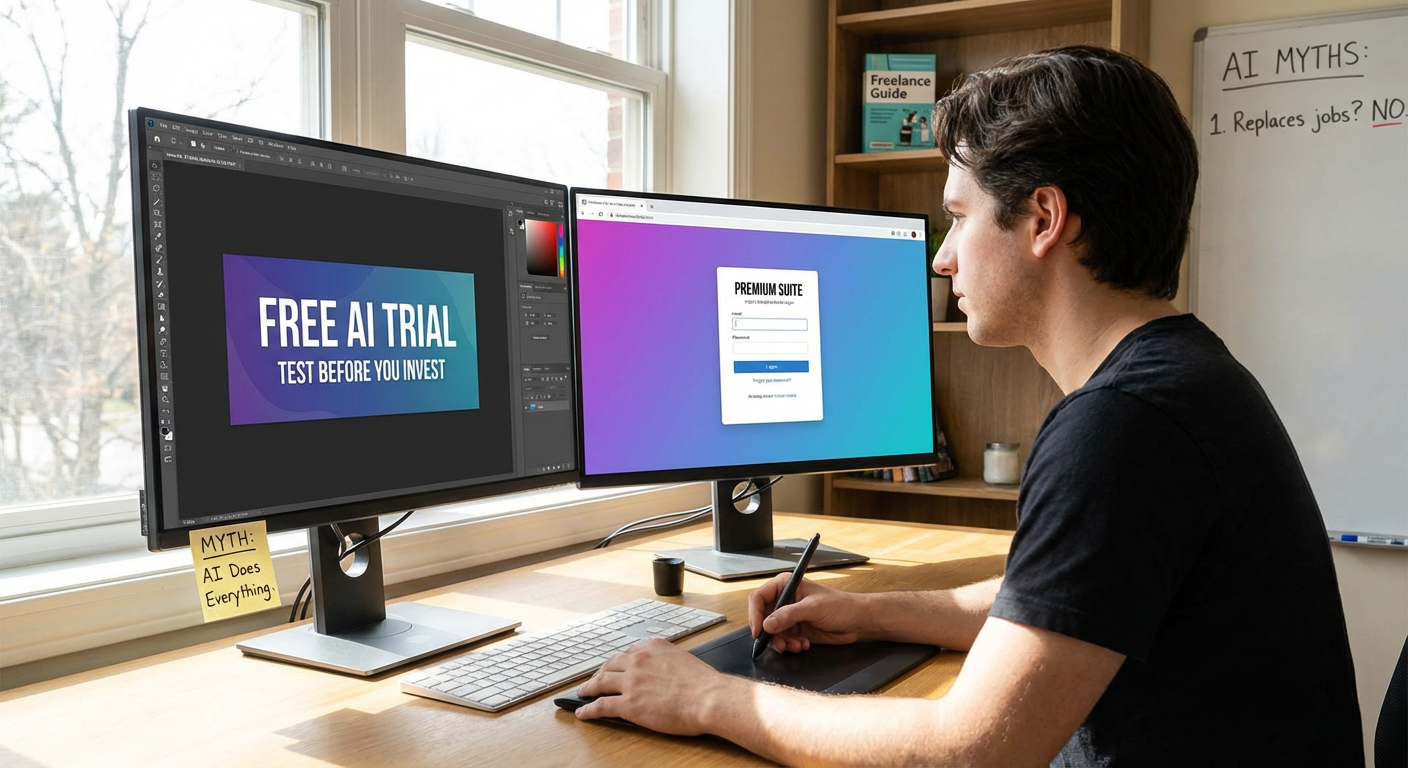
Many freelancers believe they need expensive AI subscriptions to stay competitive. That’s not true. Most AI tools offer free tiers or trials that let you test core features before committing. Try tools like ChatGPT, Canva’s AI features, or Grammarly’s free plan to see if they actually save you time. Track how much faster you complete tasks with and without the tool. Only upgrade if the free version limits your productivity in a measurable way. This hands-on approach prevents you from wasting money on tools you don’t need.
- Create a Simple Before-and-After Test for Each AI Tool
It’s easy to assume AI will speed up your work, but you need proof. Pick one task you do regularly, like writing email drafts or resizing images. Time yourself doing it manually, then do the same task using an AI tool. Compare the time spent and the quality of the result. If the AI version takes just as long after you factor in editing and prompting, it might not be the right fit. This simple test helps you make decisions based on your actual workflow, not marketing claims.
- Keep a Myth vs. Reality Journal for One Month
When you hear a bold claim about AI, write it down. Then spend a few minutes researching or testing it yourself. For example, if someone says AI can write entire blog posts without editing, try it and note the results. After a month, review your notes to see which myths collapsed under scrutiny. This practice trains you to think critically and rely on evidence instead of headlines. It also gives you concrete examples to share with clients who have their own misconceptions.
- Use AI for Repetitive Tasks, Not Creative Strategy
A common myth is that AI can handle all creative work. In reality, AI excels at repetitive, structured tasks like formatting text, generating variations of a headline, or resizing images. It struggles with high-level strategy, understanding client subtext, and making judgment calls. Assign AI the boring stuff that drains your energy, then use your freed-up time for the creative and strategic work only you can do. This division of labor keeps you irreplaceable while making you more efficient.
- Set Up a Weekly AI Experiment Hour
Block out one hour each week to try a new AI tool or feature. This could be testing a voice transcription service, experimenting with an AI image generator, or learning a new prompt technique. Keep the stakes low and focus on learning, not perfecting. Over time, these small experiments add up, giving you a broad toolkit and firsthand knowledge of what works. You’ll also stop relying on secondhand opinions and start forming your own informed views.
- Ask Clients What They Actually Think About AI
Many freelancers assume clients either love or hate AI, but most clients just want good results. During your next project kickoff, ask if they have preferences around AI use. Some might be fine with it, others might want disclosure, and a few might be curious to learn more. This simple conversation clears up assumptions and helps you tailor your process. It also positions you as transparent and thoughtful, which builds trust.
- Learn to Spot AI-Generated Content in Your Niche
If you work in writing, design, or media, train yourself to recognize AI-generated work. Read samples of AI content, look for patterns like repetitive phrasing or generic examples, and compare them to human-written pieces. This skill helps you understand what clients might be worried about and how to differentiate your work. It also prepares you to edit AI drafts more effectively if you choose to use them as a starting point.
- Build a Personal AI Use Policy for Your Business
Write down a short, clear policy about how you use AI in your freelance work. Decide which tasks you’ll use AI for, how you’ll disclose it to clients, and where you draw the line. This could be as simple as a few bullet points in a document. Having a policy helps you stay consistent, makes client conversations easier, and gives you confidence in your choices. Update it as you learn more and your needs change.
- Track Time Saved vs. Time Spent Learning
AI tools can save time, but they also require a learning curve. For every tool you adopt, track how many hours you spend learning it versus how many hours it saves you over the next month. If a tool takes ten hours to learn but only saves you two hours of work, it might not be worth it right now. This practical calculation keeps you from chasing every shiny new tool and helps you focus on what actually improves your bottom line.
- Practice Editing AI Output Instead of Using It Raw
A dangerous myth is that AI output is ready to deliver as-is. Treat AI content like a rough draft that needs your expertise to shine. Practice editing AI-generated text, images, or code with the same care you’d give your own work. Add your voice, fix inaccuracies, and inject personality. This approach lets you benefit from AI speed while maintaining the quality clients expect. It also protects you from the embarrassment of submitting low-quality work.
- Join One AI-Focused Community for Freelancers
Find a forum, Slack group, or social media community where freelancers discuss AI tools and strategies. Look for groups that share practical tips, not just hype or fear. Participate by asking questions, sharing your experiments, and learning from others’ experiences. This real-world feedback loop helps you separate myths from tested advice. It also keeps you updated on new tools without having to research everything yourself.
- Create a Checklist for Vetting AI Tools
Before adopting any AI tool, run it through a simple checklist. Ask yourself: Does it solve a real problem I have? Is there a free or cheaper alternative? Can I learn it in a reasonable time? Does it integrate with my current workflow? Will it save me more time than it costs? This checklist prevents impulse decisions and keeps you focused on tools that genuinely help your business. Adjust the questions as you learn what matters most to you.
- Teach a Client or Friend How to Use a Simple AI Tool
Teaching forces you to understand a topic deeply. Pick a simple AI tool like a grammar checker or background remover and walk someone through it. Explain what it does well, where it falls short, and how to get the best results. This exercise clarifies your own thinking and often reveals gaps in your knowledge. It also positions you as knowledgeable and helpful, which can lead to referrals or new opportunities.
- Compare AI-Assisted Work to Your Best Manual Work
Don’t compare AI output to your average work. Compare it to your best work when you’re focused and energized. If the AI version can match that quality after editing, it’s a useful tool. If it consistently falls short, you might be better off sticking to manual methods for high-stakes projects. This honest comparison keeps your standards high and ensures you’re not sacrificing quality for speed.
- Set Boundaries Around AI Use to Avoid Burnout
Some freelancers think they need to use AI for everything to stay competitive. That’s a myth that leads to stress and tool overload. Choose two or three areas where AI genuinely helps you and ignore the rest. For example, use AI for transcription and image editing, but handle writing and client communication yourself. This focused approach keeps your workflow manageable and prevents you from feeling overwhelmed by constant change.
- Document Your AI Workflow for Consistency
If you use AI tools regularly, write down your process step by step. For example, if you use AI to draft social media posts, document the prompts you use, how you edit the output, and any common fixes you apply. This documentation ensures consistent quality, makes training an assistant easier, and helps you refine your process over time. It also gives you something concrete to show clients if they ask about your methods.
- Run a Monthly Review of Your AI Tool Stack
Once a month, review all the AI tools you’re using. Ask yourself if each one still serves a purpose or if you’ve stopped using it. Cancel subscriptions for tools that don’t earn their keep. This regular audit prevents tool bloat and keeps your expenses lean. It also reminds you to revisit tools you might have dismissed earlier, as they often improve with updates.
- Focus on Skills That Complement AI, Not Compete With It
Instead of worrying about AI replacing you, invest time in skills that work well alongside AI. This includes critical thinking, client communication, project management, and niche expertise. These skills make you the human in the loop who guides AI tools and ensures quality. For example, AI can draft a blog post, but you bring the industry knowledge and client understanding that make it valuable. This complementary approach makes you more valuable, not less.
- Share Your AI Experiments Publicly to Build Authority
Write a blog post, social media thread, or video about your experiences testing AI tools. Share what worked, what didn’t, and what you learned. This transparency builds trust and positions you as someone who thinks critically about technology. It can also attract clients who appreciate your thoughtful approach. You don’t need to be an expert to share. Your honest, practical perspective is valuable to others figuring out the same questions.
AI myths in freelancing can cloud your judgment and slow you down. By taking a hands-on, practical approach to testing tools, tracking results, and staying curious, you can cut through the noise and make smart decisions for your business. You don’t need to be an AI expert or adopt every new tool that launches. Focus on what genuinely helps you work better, communicate clearly with clients, and keep learning as the landscape shifts. With these practical tips, you’ll build confidence in your choices and stay competitive without losing what makes your work valuable.